+86 10 8760 0388 ,+86 132 4154 3270
MON–SAT:08:00–18:00
Architects comparing vibration stainless steel sheet for architectural design, mirror finish stainless steel for exterior cladding, and vibration stainless steel vs mirror finish cost are usually solving practical problems, not simply choosing a surface color. Glare, fingerprints, fabrication marks, corrosion resistance, and long-term maintenance all affect the result. The decision depends on brushed stainless steel, No. 4 finish, and architectural metal cladding requirements, as well as technical factors such as surface roughness (Ra), specular reflectance, and passivation.

A dark lobby may need a controlled, low-glare wall surface that hides fingerprints between cleaning cycles. A retail entrance may instead require a bright reflective finish that makes the façade appear larger and more premium. Both finishes use stainless steel, but they behave differently during design development, fabrication, installation, and daily use. This comparison explains the measurable differences, likely costs, real project experiences, and selection criteria so that the specification is based on performance rather than appearance alone.
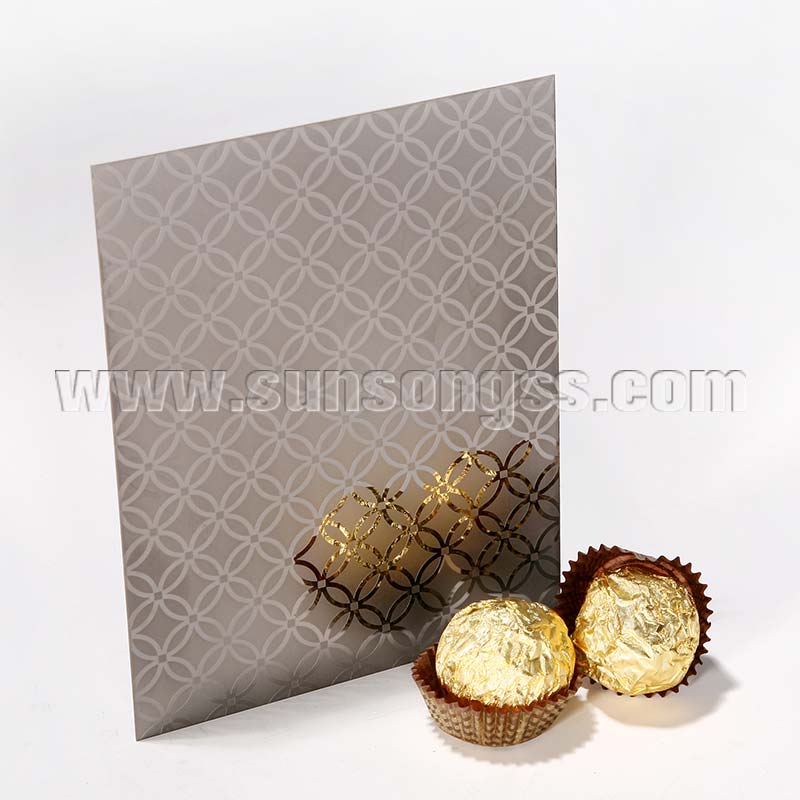
Before comparing performance, it is important to clarify the manufacturing process. “Vibration finish” is commonly used in the architectural market for a non-directional textured stainless steel surface. It is produced by abrasive treatment that creates overlapping circular or irregular lines. The visual pattern changes with viewing angle, but it does not form the continuous straight grain associated with conventional brushed stainless steel.
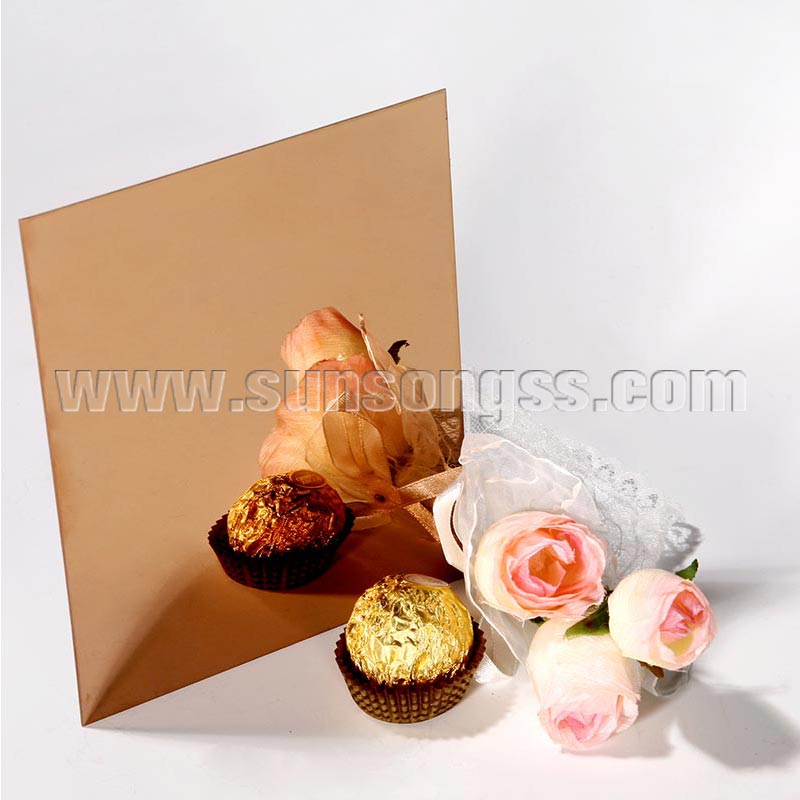
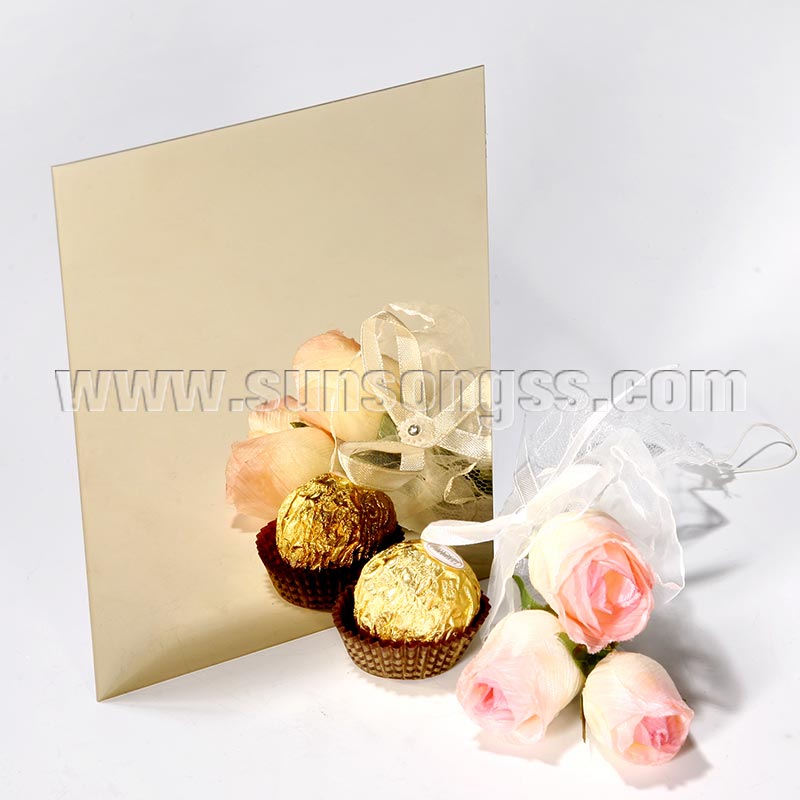
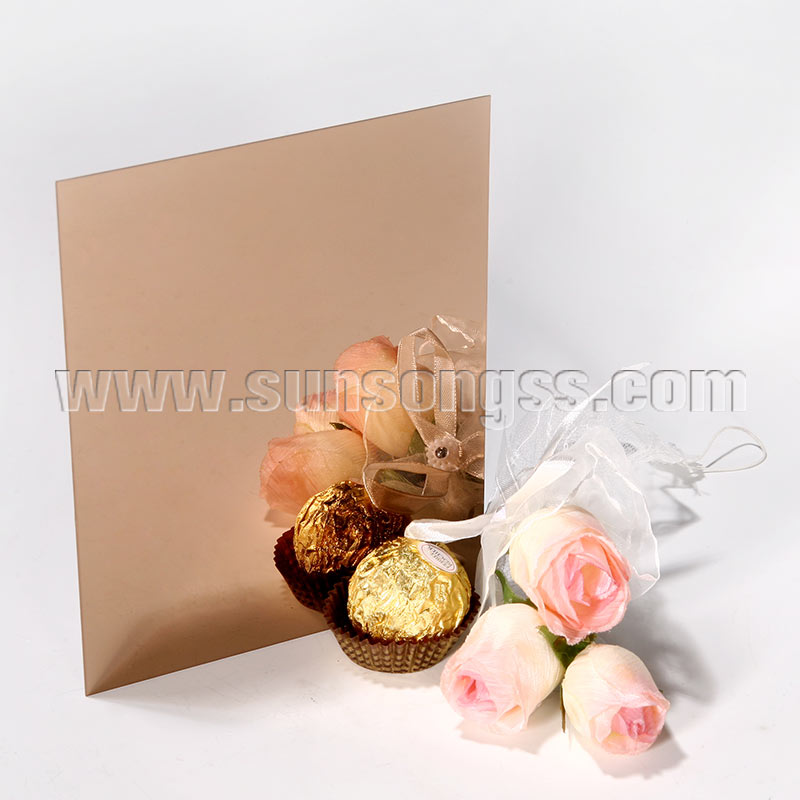
Mirror finish stainless steel is mechanically polished through progressively finer abrasives. The final surface has a high degree of specular reflection, meaning that incident light is reflected in a concentrated direction rather than scattered across a textured surface. It is often described as No. 8 or super-mirror finish, although exact designations vary between mills and fabricators.
| Performance factor | Vibration stainless steel | Mirror finish stainless steel |
|---|---|---|
| Typical visual character | Non-directional texture with a soft, contemporary appearance | Bright, smooth, highly reflective appearance |
| Common surface classification | Custom vibration or non-directional finish; often specified near No. 4 family applications | No. 8, super-mirror, or custom polished finish |
| Typical surface roughness | Approximately Ra 0.4–1.5 µm, depending on abrasive media and supplier | Approximately Ra 0.05–0.20 µm for architectural polished surfaces |
| Glare control | Strong; scattered reflection reduces sharp highlights | Limited; direct sunlight and spotlights can create intense highlights |
| Fingerprint visibility | Generally lower, especially with darker finishes or larger texture patterns | High; fingerprints, oil marks, and dust can be visible at close range |
| Scratch tolerance in public areas | Minor marks may blend into the non-directional texture | Fine scratches can interrupt the reflection and become immediately noticeable |
| Repair appearance | Local blending is usually more achievable | Spot repair can create visible changes in reflection and distortion |
| Typical design use | Elevator interiors, columns, wall panels, reception areas, retail interiors | Feature walls, luxury interiors, signage, display details, selected façade elements |
These ranges are indicative rather than universal specifications. A project should request a physical control sample because abrasive type, stainless steel grade, sheet thickness, polishing pressure, and inspection lighting can change the final appearance. A finish that looks uniform under factory lighting may appear noticeably different under a 4000 K LED wall washer or direct afternoon sunlight.
The first major difference appears when the panels meet artificial or natural light. A mirror surface reflects a large portion of incident light in a defined direction. In a shopping mall, this can create bright points from downlights, moving reflections from escalators, and distracting images of people passing the wall.
Vibration stainless steel scatters light through its irregular texture. It still looks metallic, but its luminance is distributed over a wider viewing angle. This makes it more forgiving in elevator cabins, reception counters, transit stations, and hospitality corridors where occupants view the surface from several directions.
For a façade, the issue is not simply whether the material is attractive. The design team should perform a glare review that considers panel orientation, sun path, neighboring roads, pedestrian sightlines, and nearby residential windows. Mirror finish can be successful on a shaded entrance canopy, but it may be unsuitable on a large south-facing wall without solar and visual-impact analysis.
Mirror stainless steel is comparatively easy to wipe because its surface is smooth, but it shows contamination more clearly. A handrail or lift door can develop visible touch patterns several times a day. If the building owner expects a presentation-grade appearance, cleaning frequency may need to increase from daily wiping to multiple checks during peak visitor periods.
Vibration surfaces hide small deposits and fingerprints more effectively because the non-directional pattern breaks up reflected outlines. They are not maintenance-free, however. Grease, cement dust, chlorides, and embedded iron particles can still stain stainless steel. Routine cleaning should use clean water, a neutral detergent, and a soft cloth. Chloride-containing cleaners, steel wool, and carbon-steel tools should be avoided because they can initiate pitting or transfer iron contamination.
For coastal buildings, grade 316 or 316L is generally preferred over 304 when chloride exposure is significant. The correct grade does not eliminate maintenance; it improves resistance to localized corrosion when the surface is properly fabricated, cleaned, and passivated.
A mirror finish creates a continuous visual field. A 0.2 mm scratch can interrupt that field and remain visible from several meters away, especially when a linear light source is reflected across the panel. Repairing one area without changing the surrounding reflectance is difficult. The usual remedy is to replace the panel or repolish an entire defined section.
Vibration stainless steel has a practical advantage in high-contact locations. Because the pattern is non-directional, a small abrasion can often be blended into the surrounding texture by an experienced finishing shop. The repair still requires a sample comparison, and excessive local grinding can produce a lighter or darker patch. Nevertheless, the probability of a visually acceptable repair is usually higher than with a true mirror surface.
| Architectural scenario | Preferred finish | Reason | Important caution |
|---|---|---|---|
| Elevator doors and cabin walls | Vibration stainless steel | Reduces glare and disguises fingerprints and minor contact marks | Confirm that the texture remains consistent across doors and returns |
| Luxury hotel feature wall | Either, depending on lighting | Vibration gives controlled sophistication; mirror creates drama and depth | Review full-size samples under final lighting |
| Retail display background | Mirror finish for selected zones | Reflects merchandise and can visually enlarge a compact space | Control reflections so products and lighting are not distorted |
| Exterior canopy or shaded entrance | Mirror finish may be suitable | Provides a high-end focal point where glare is controlled | Check reflected sunlight and pedestrian safety |
| Large sun-exposed façade | Vibration stainless steel | Offers a more stable visual field and lower specular glare | Analyze thermal movement, oil-canning, and panel orientation |
| Public transport or high-traffic wall panels | Vibration stainless steel | Better tolerance of touch, cleaning, and small scratches | Specify anti-graffiti cleaning procedures and replacement strategy |
| Signage, logos, and small decorative inserts | Mirror finish | Creates crisp contrast and strong visual emphasis | Protect the surface during transport and installation |
The project’s scale also matters. A mirror finish can look exceptional on a 600 mm-wide column but become visually aggressive across a 1,500 m² façade. Conversely, a vibration finish may appear refined on a continuous wall but lack the sharp contrast required for a small logo or premium display niche.
Material price is only one part of the budget. A realistic comparison should include stainless steel grade, thickness, finish processing, protective film, edge fabrication, forming, packaging, installation, cleaning, and the cost of rejected or damaged panels.
| Cost component | Vibration stainless steel | Mirror finish stainless steel |
|---|---|---|
| Base sheet cost | Usually moderate, subject to grade and thickness | Usually higher because of additional polishing stages |
| Fabrication tolerance | More forgiving of minor handling variation | Requires tighter protection and quality control |
| Protective film requirement | Recommended for architectural installation | Essential in most projects and often retained until completion |
| Waste and replacement risk | Generally lower for high-contact applications | Potentially higher if scratches, distortion, or polishing defects occur |
| Maintenance cost | Often lower where fingerprints and abrasions are frequent | Can be higher where a pristine reflection is required |
As a budgeting example, a project using 1.5 mm 304 stainless steel may find that a custom vibration finish adds approximately 10%–25% to a standard mill finish, while a high-quality mirror finish may add approximately 25%–60%. These are planning ranges, not quotations. Small orders, tight color matching, 316L grade, large panels, complex forming, and export packaging can move the final price substantially.
There is also a lifecycle calculation. If mirror-finish elevator panels require replacement every four years because of visible scratching, while vibration panels remain acceptable for eight years with routine cleaning, the initially cheaper option may produce the higher ownership cost. The correct comparison is therefore:
Total cost of ownership = purchase price + fabrication loss + installation protection + cleaning labor + repair or replacement cost.
One installer account from a commercial elevator refurbishment illustrates the difference clearly. The original specification called for polished stainless steel on all cabin walls. After several weeks of operation, the lower panels showed hand marks, trolley contact scratches, and bright reflections from ceiling lamps. The property team changed the lower 1,200 mm zone to a vibration finish while retaining polished panels above the handrail. According to the installation team, the mixed scheme reduced visible daily cleaning complaints and kept the upper reflective detail that the designer wanted.
Another project account involved a boutique hotel reception desk. The design team initially selected mirror stainless steel because it matched brass lighting and dark stone. During mock-up review, the reflected light from the pendant fixtures created bright bands across the receptionist’s working area. The final solution used mirror finish on the front logo panel and vibration stainless steel on the counter return. Guests still saw a reflective brand feature, while staff gained a lower-glare work surface.
These cases do not prove that one finish is universally better. They show that user satisfaction often depends on zoning. High-touch surfaces, lower wall sections, lift interiors, and circulation areas benefit from visual forgiveness. Feature strips, logos, display backgrounds, and carefully controlled focal points can use mirror finish more effectively.
When evaluating a supplier such as SUNSONG, buyers should ask for finish samples, grade certificates, thickness tolerance, inspection criteria, packaging details, and photographs of completed architectural applications. A supplier’s advantage is meaningful only when it can be demonstrated through repeatable samples and consistent batch production.
Specify the stainless steel grade before discussing surface appearance. Grade 304 is widely used for interior architectural work, while 316 or 316L is more appropriate for marine atmospheres, de-icing salt exposure, swimming-pool environments, and other chloride-rich conditions. Thickness should be selected according to span, support spacing, forming method, and resistance to handling damage rather than appearance alone.
Words such as “vibration,” “hairline,” and “mirror” can describe different commercial standards. The specification should state the approved sample size, viewing distance, lighting conditions, allowable shade variation, scratch limits, and whether the grain or texture must continue across adjacent panels.
Stainless steel should be protected from carbon-steel dust, abrasive contamination, cement slurry, and adhesive residue. Protective film must be compatible with the finish and removed within the supplier’s recommended period. Long exposure to sunlight can make some films difficult to remove and may leave adhesive residue.
A responsible Vibration Stainless Steel Sheet Manufacturer should be able to discuss stainless grade, thickness, surface roughness, polishing method, flatness, edge quality, protective film, and packaging. For mirror panels, ask how distortion is controlled. For vibration panels, ask how texture consistency is maintained across different production lots.
A 300 mm sample is useful for color and texture, but a full-size mock-up reveals panel flatness, joint lines, reflected lighting, shadow behavior, and the relationship between finish and surrounding materials. Approving the mock-up before cutting the full order can prevent expensive replacement work.
Choose vibration stainless steel if the project includes elevators, public corridors, reception counters, transit facilities, large wall areas, strong artificial lighting, or frequent hand contact. It is also the safer choice when the building owner prioritizes consistent appearance, manageable cleaning, and practical repair over maximum reflectivity.
Choose mirror finish stainless steel if the project needs a high-reflection focal point, luxury retail detailing, a crisp logo background, a display feature, or a carefully controlled interior accent. It is less suitable when the surface will receive frequent contact, direct sunlight, abrasive cleaning, or uncontrolled reflections.
For many architectural designs, the most balanced answer is not “vibration versus mirror” but a planned combination of both. Specify vibration stainless steel for durable visual continuity and mirror panels where reflection has a clear design purpose. Before placing an order, request samples from a qualified Vibration Stainless Steel Sheet Manufacturer, compare them under the project’s actual lighting, confirm the stainless grade and Ra target, and obtain a fabrication and maintenance plan from SUNSONG or another supplier. This process reduces glare risk, limits unexpected replacement costs, and helps the finished building deliver the intended appearance over its service life.

Visit Us:


Call Us:
Copyright © Beijing Shenghe Zhongtai Stainless Steel Co., Ltd. All Rights Reserved | Sitemap
Technical Support: