+86 10 8760 0388 ,+86 132 4154 3270
MON–SAT:08:00–18:00
In interior projects, choosing between brushed vs mirror stainless steel sheets for interior architecture is not simply a matter of appearance. Designers comparing the best stainless steel sheet finish for elevator interiors or stainless steel wall panels for commercial interiors must consider glare, fingerprints, cleaning cycles, fabrication, and lifecycle cost. The key variables are surface roughness (Ra), ASTM A240 grade selection, and specular reflectance. This guide explains where each finish works, how much it may cost, and what a Stainless Steel Sheets Manufacturer should provide before installation.

A hotel developer may want mirror stainless steel to make a narrow lobby appear deeper, while the facilities team may reject it after seeing fingerprints around the elevator buttons. In another project, a designer may select brushed panels for a calm, architectural appearance, then discover that directional grain becomes visibly inconsistent when sheets are installed in different orientations.
These conflicting priorities explain why the finish should be selected after studying the space rather than from a sample photograph. Mirror stainless steel reflects surrounding light and forms a polished visual field; brushed stainless steel scatters light through linear abrasion marks. Both are generally available in 304 stainless steel, while 316 stainless steel is more appropriate where chloride exposure, coastal air, or aggressive cleaning chemicals increase corrosion risk.
The following figures are typical project ranges, not universal specifications. A qualified stainless steel sheets manufacturer should confirm the exact grade, thickness, finish number, flatness, protective film, and inspection standard in the quotation.
| Parameter | Brushed stainless steel sheet | Mirror stainless steel sheet | Interior design implication |
|---|---|---|---|
| Common finish designation | No. 4 or hairline finish | No. 8 or highly polished finish | No. 4 has visible linear grain; No. 8 produces a near-reflective surface. |
| Typical surface roughness | Approximately Ra 0.2–0.8 μm, depending on abrasive belt and processing | Often Ra below 0.1 μm after polishing, subject to supplier process | Lower roughness generally gives stronger reflection but does not make the sheet scratch-proof. |
| Typical interior thickness | 0.8–1.5 mm for wall cladding and panels | 0.8–1.5 mm for wall cladding and panels | Thickness should be engineered with the substrate, spans, bends, and fixing system. |
| Visual effect | Soft directional texture; reduces visual noise | Bright reflection; increases perceived depth and light | Use brushed surfaces for controlled visual rhythm and mirror surfaces for dramatic focal areas. |
| Fingerprint visibility | Moderate to low when grain direction is correctly oriented | High, especially under strong spot lighting | Mirror panels often require more frequent touchpoint cleaning. |
| Scratch visibility | Fine scratches may blend with the grain if repaired in the same direction | Small scratches can be conspicuous because they interrupt reflection | Mirror panels need strict packaging, handling, and protective-film control. |
| Light behavior | Diffuse reflection with lower glare | Specular reflection and possible glare | Check the finish beside luminaires, daylight, and polished stone before approval. |
| Fabrication sensitivity | Moderate; grain direction must remain consistent after cutting and bending | High; polishing, forming, welding, and handling can affect the visible surface | Mirror components often need more controlled fabrication and inspection. |
| Maintenance profile | Routine cleaning with the grain is usually practical | Requires soft, non-abrasive cleaning and more careful fingerprint removal | Cleaning instructions should be included in the handover documents. |
Finish does not replace material specification. For most dry interior spaces, 304 or 304L stainless steel is a common choice. In seaside hotels, pool areas, spa environments, and locations exposed to de-icing salts, 316 or 316L may offer better resistance because molybdenum improves resistance to chloride-induced pitting. A project specification should also identify whether the sheet is annealed, cold-rolled, slit, laser-cut, folded, or laminated to a backing panel.
Ask the stainless steel sheets manufacturer to provide a mill test certificate, thickness tolerance, finish sample, protective-film specification, and inspection photographs. If the project includes visible joints, request a full-size mock-up rather than relying on a 100 mm sample. A small sample cannot show how grain direction, reflections, lighting, and panel joint alignment will interact across a 20-square-meter wall.
Brushed stainless steel is normally the safer default for elevator side walls, door surrounds, and handrail zones. It reduces the visual prominence of fingerprints and creates a consistent commercial appearance under LED downlights. A hairline finish can also support a vertical design language that visually elongates a lift cabin.
Mirror stainless steel can work effectively on a rear elevator wall or ceiling panel where the objective is to increase perceived depth. However, it should be combined with adequate lighting control. Direct point lights can produce glare, while reflected passengers, signage, and door movement may make the cabin feel visually busy. A practical solution is often brushed panels on high-contact walls and mirror panels on a protected rear feature wall.
Mirror panels create strong visual impact behind reception desks, in display niches, and around luxury retail fixtures. They reflect merchandise, decorative lighting, and architectural stone, making a compact space appear larger. The trade-off is operational: food residue, fingerprints, and cleaning streaks are easier to see.
Brushed stainless steel is more forgiving around service counters, kick plates, buffet areas, and restaurant wall protection. It still communicates durability, but its directional texture reduces the contrast of small marks. In food-service environments, the cleaning method matters as much as the finish: chlorine-rich cleaners and steel wool can damage the passive chromium oxide layer or leave embedded iron particles that later appear as rust staining.
In hospitals, clinics, transport terminals, and schools, a satin or fine-brushed surface is often easier to manage than a large mirror field. It provides cleanability without making every fingerprint visually dominant. For high-touch areas, designers should specify rounded edges, sealed joints, and compatible adhesives or mechanical fixings rather than treating the sheet finish as the only hygiene measure.
Mirror stainless steel may still be suitable for protected decorative zones, wayfinding features, and observation areas. It is less suitable where repeated contact, trolley impact, or abrasive cleaning is expected unless the maintenance team accepts the additional inspection and replacement risk.
The installation process begins before the sheets arrive. Confirm the substrate flatness, panel layout, joint width, grain direction, corner detail, and access route. For brushed panels, mark the grain direction on every component. A 90-degree rotation between adjacent panels can appear as a color change even when the stainless steel grade and finish are identical.
For mirror panels, keep the protective film in place during cutting, transport, and most installation work. Do not drag sheets across one another. After installation, remove the film according to the supplier’s instructions so adhesive residue is not baked onto the surface by sunlight or construction heat.
In a commercial building with daily cleaning, a facilities manager should inspect touchpoints weekly during the first month. This early review identifies whether the selected finish is producing unacceptable glare, streaking, or visible damage before the same detail is repeated throughout the building.
Material price varies with grade, thickness, sheet size, finish quality, quantity, tolerances, protective film, and fabrication. As an illustrative planning range, standard 304 brushed or mirror sheet may fall around USD 35–90 per square meter for common interior thicknesses in some markets. 316 grade, colored PVD coating, non-standard dimensions, tighter flatness, and small-batch orders can increase the figure substantially.
| Cost component | Brushed finish tendency | Mirror finish tendency |
|---|---|---|
| Base stainless steel | Similar when grade and thickness match | Similar when grade and thickness match |
| Surface processing | Usually lower than high-polish processing | Usually higher because multiple polishing stages may be required |
| Fabrication and handling | Moderate inspection and protection requirements | Higher risk of cosmetic rejection, re-polishing, or replacement |
| Cleaning labor | Often lower in fingerprint-prone zones | Potentially higher in high-touch and high-glare areas |
| Replacement risk | Lower when grain-direction repair is possible | Higher when scratches interrupt a broad reflection |
For a fair comparison, request a delivered-and-installed quotation rather than comparing sheet-only prices. A 10% lower material price can disappear if mirror panels require special packaging, additional inspection, slower installation, or replacement after handling damage. SUNSONG can be considered during this stage because its quotation process can be structured around grade, finish, dimensions, protective film, fabrication, and project quantity instead of treating all stainless steel sheets as equivalent.
One anonymized project review from a commercial elevator refurbishment illustrates the decision. The design team initially specified mirror stainless steel for all cabin walls because the elevator measured less than 2.2 meters deep. After the facilities team tested sample panels for several days, fingerprints were clearly visible around the control panel and handrail. The final scheme used brushed 304 panels on the side walls and a mirror panel on the rear wall. The design retained the depth-enhancing reflection, while the high-contact surfaces required less frequent spot cleaning.
In a separate restaurant fit-out, the owner selected brushed panels for a service corridor because delivery carts repeatedly contacted the wall. The contractor reported that directional scratches could be blended more consistently than on the mirror sample. The owner’s feedback was not that brushed steel was maintenance-free; rather, small marks were less visually dominant and the wall remained acceptable between scheduled cleaning rounds.
These cases do not prove that one finish is universally superior. They show why user word-of-mouth should be interpreted alongside traffic level, lighting, cleaning practice, and repair capability. A designer who values dramatic reflection may rate mirror steel highly, while a facilities manager responsible for hundreds of daily touchpoints may prefer brushed steel.
This is the strongest general recommendation for elevator side walls, corridors, handrails, kick plates, service counters, and public facilities. Select it when reduced fingerprint contrast, lower glare, and practical maintenance matter more than maximum reflectivity.
This is often the most balanced solution for hotels, offices, and retail interiors. Use mirror stainless steel as a focal surface and brushed stainless steel around touchpoints, joints, doors, or circulation routes. The combination can reduce maintenance exposure without sacrificing the visual depth associated with polished metal.
Mirror is appropriate for reception backdrops, protected niches, decorative ceilings, luxury retail displays, and rear elevator walls where traffic contact is limited and lighting has been tested. It is less suitable for walls that receive frequent impact or are cleaned with abrasive tools.
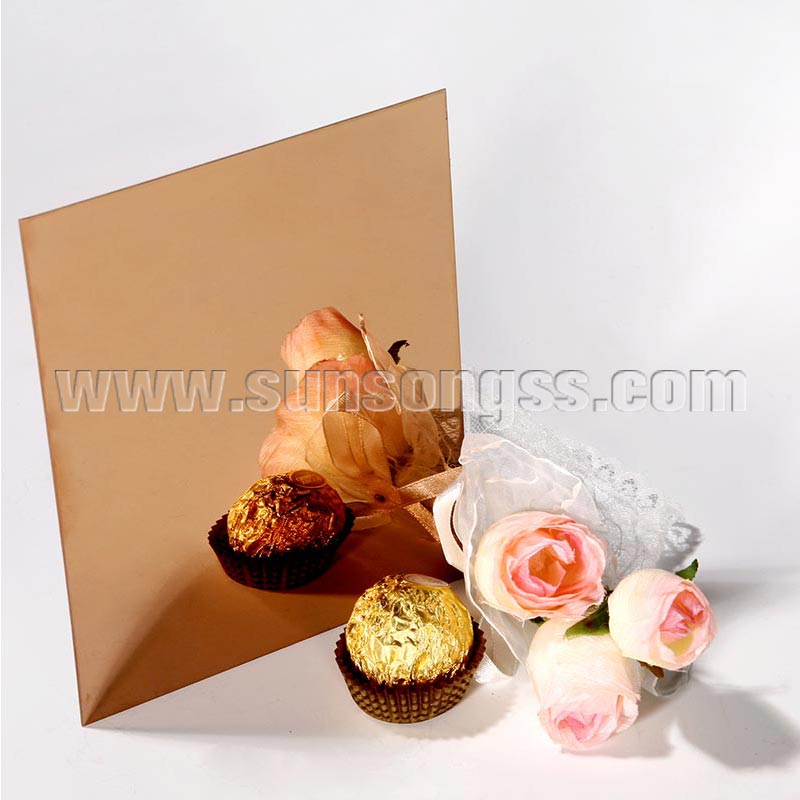
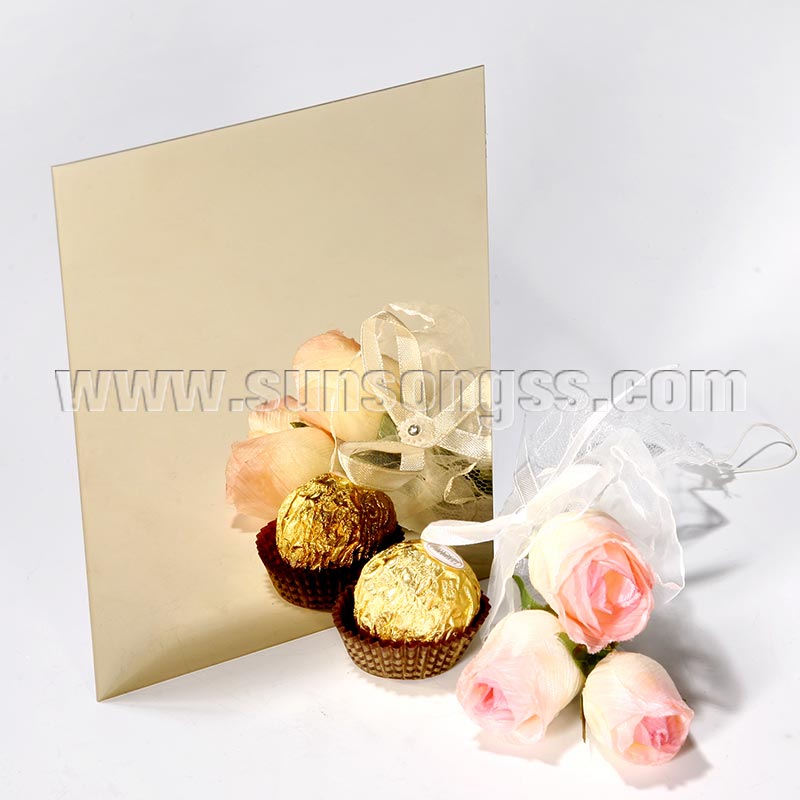
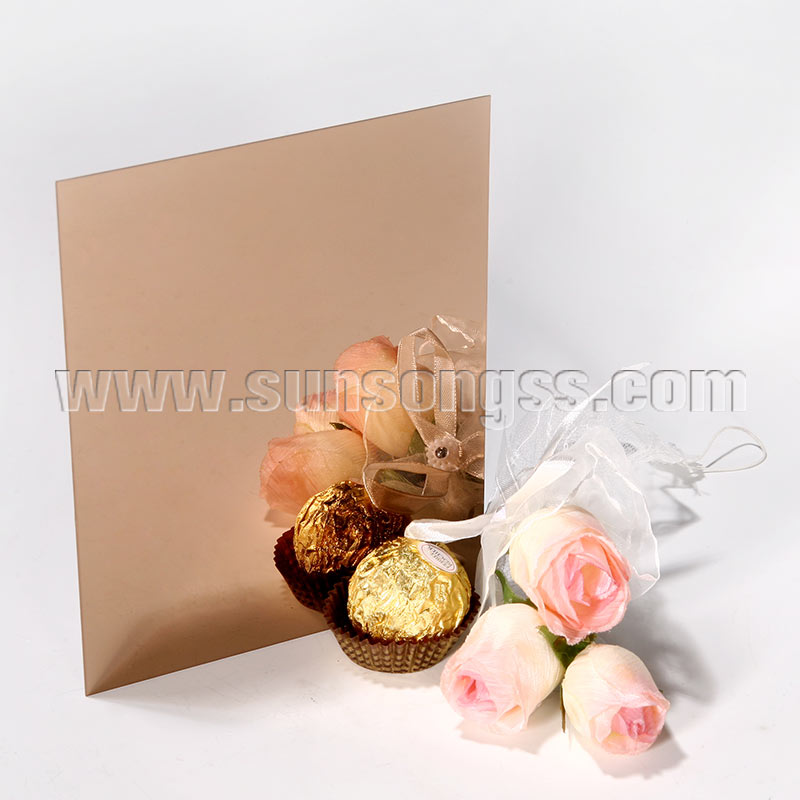
PVD stainless steel can provide gold, bronze, black, or other architectural colors, but coating consistency, edge treatment, repairability, and batch matching must be confirmed. Do not use color coating to hide an unresolved problem with glare, fingerprints, or panel alignment. Approve the underlying brushed or mirror sample first, then review the coated mock-up under actual project lighting.
Brushed stainless steel is suitable for clients who prioritize controlled reflection, lower visual sensitivity to fingerprints, directional architectural texture, and easier day-to-day upkeep. It is not ideal when the design requires a seamless mirror effect or when the grain direction cannot be coordinated across many custom-shaped components.
Mirror stainless steel is suitable for clients who want maximum reflectivity, visual depth, and a luxury feature surface and who can provide careful handling and regular cleaning. It is not a good choice for heavily touched walls, abrasive maintenance regimes, uncontrolled spot lighting, or projects where minor scratches cannot be tolerated.
Neither finish should be selected solely by the lowest square-meter quotation. Confirm stainless steel grade, thickness, finish standard, surface roughness target, sheet flatness, fabrication tolerances, protective film, packaging, installation method, and maintenance instructions. Those details determine whether the installed surface performs as expected.
The practical answer to brushed vs mirror stainless steel sheets for interior architecture depends on use rather than fashion. Brushed panels are generally the safer choice for high-traffic interiors and stainless steel wall panels for commercial interiors, while mirror panels are effective as controlled feature surfaces and for the best stainless steel sheet finish for elevator interiors when glare and cleaning have been tested. Before ordering, ask a stainless steel sheets manufacturer such as SUNSONG for matched samples, grade documentation, a full-size mock-up, and a project-based quotation. Compare architectural metal cladding, decorative stainless steel panels, and interior wall protection requirements alongside surface roughness (Ra), ASTM A240 compliance, and specular reflectance. Request the samples and technical quotation first, then make the final finish decision with the architect, contractor, and facilities team together.

Visit Us:


Call Us:
Copyright © Beijing Shenghe Zhongtai Stainless Steel Co., Ltd. All Rights Reserved | Sitemap
Technical Support: